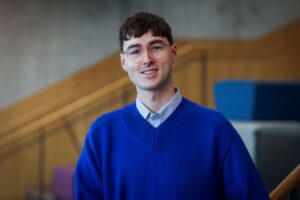
“I first developed an interest in research during my undergraduate degree. I was studying psychology, but I was able to tailor my course to my interests and focus on neuroscience. I later completed a taught master’s in Neural Stem Cells and Nervous System Repair in King’s College London, followed by a research master’s in Advanced Biological Science.
Globally, neurological diseases are the biggest burden on our healthcare systems. My doctoral research with Dr Janosch Heller in DCU has two strands to help address this: we’re examining the potential for a novel therapy for epilepsy that focuses on astrocytes rather than neurons, and conducting detailed microscopy to support our understanding of the brain.
Astrocytes are a type of glial cell that regulates the brain. They’re called after stars because of their shape.
“Existing epilepsy drugs exclusively target neurons. I’m interested in the possibility of new therapies for epilepsy that could harness the way astrocytes rebalance the nervous system and remove waste from the brain.”
In every neurological disease there is astrocyte dysfunction, and an alteration to this process of moving cerebrospinal fluid (CSF) through the brain, called glymphatics. If we can find a treatment that rebalances that movement, it’s possible this could be an effective treatment for diseases like epilepsy.
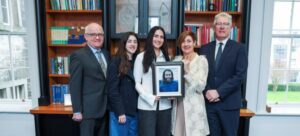
Thanks to the Orla Benson Memorial Scholarship, I’ll be collaborating with researchers in Lund University, Sweden to further my research. I’ll be working in Sweden with Prof Iben Lundgaard, who did her postdoctoral training with the researcher who first discovered glymphatics, Prof Maiken Nedergaard. I had the chance to meet them both at the first annual Glymphatic Symposium held in Lund in 2024. Having the opportunity to present my microscopy imaging of astrocytes at the first-ever conference in our field, with the founder of the field there, felt very important.
What I really like about my work is that I can show someone these beautiful images of the brain and they can instantly see what these terms like astrocyte or hippocampus mean and understand that all this is happening in their own brains. I think it’s an underutilised way of making science feel accessible and engaging.
I feel very fortunate to have had such supportive supervisors along the way. My project wouldn’t be what it is without my supervisor’s support, expertise and collaborative network.
“After my PhD, I’d like to stay in research – I find science an immense privilege to be a part of and feel a need to advocate for better neurotherapeutics.”
Main image: microscopy imaging of astrocytes by Toby Segasby